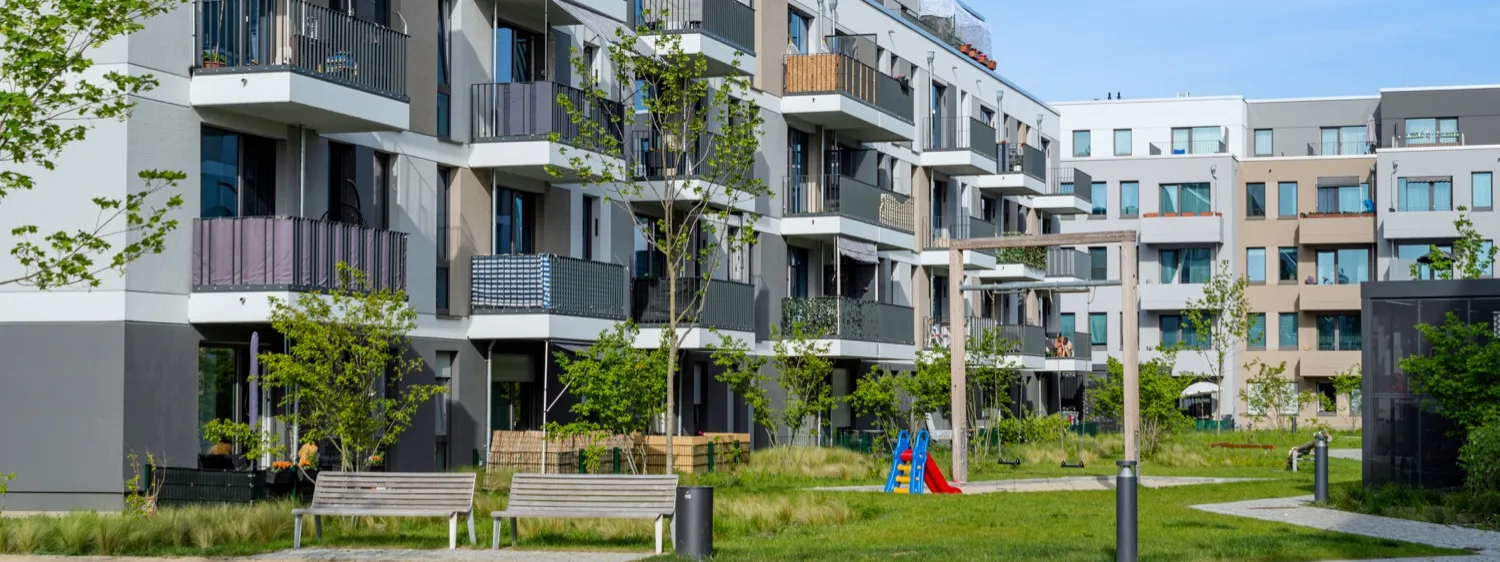
Grigg, Bratton & Brash has a dedicated team whose primary focus is affordable housing. We provide tax, audit, and consulting services to projects subsidized by:
- IRC Section 42 Low-Income Housing Tax Credits (LIHTC)
- Department of Housing and Urban Development (HUD)
- United States Department of Agriculture Rural Development (USDA RD)
- California Housing Finance Agency (CalHFA)
- Department of Housing and Community Development (CalHCD)
- Other federal and state agencies throughout the Western United States and across the country
 Affordable Housing Audits
Affordable housing properties come with requirements that go well beyond a standard financial statement audit. Our team understands the accounting, reporting, and compliance issues that arise at every stage of a property's life, from acquisition and development through construction, placed-in-service, and ongoing operations.
We have deep experience with the compliance programs that govern affordable housing, including USDA Rural Development (RD), HUD, California Department of Housing and Community Development (HCD), and CalHFA, along with the audit, compliance, and reporting requirements each one carries. We also work with properties financed through Low-Income Housing Tax Credits, tax-exempt bonds, and layered public and private funding sources.
We work closely with management, owners, investors, lenders, and agencies on matters such as investor equity, replacement and operating reserves, developer fees, subsidies, partnership allocations, cost certifications, and agency and investor reporting. Because we understand how each program and ownership structure works, we can focus the audit on what matters most for your property and help you meet your deadlines and obligations with confidence.
Cost Certifications
We provide independent cost certifications following the construction or rehabilitation of affordable housing properties. Our team examines total development costs and helps ensure they are properly classified and supported, including eligible basis for Low-Income Housing Tax Credit purposes.
We assist with the cost schedules required by federal and state agencies and housing programs, including HUD, the California Tax Credit Allocation Committee (TCAC), HCD, and CalHFA, and issue the CPA report needed to support the certification. Our experience with these requirements helps owners and developers move efficiently toward final tax credit allocations, loan closings, and permanent financing conversion.
LIHTC Partnership Tax Returns
Our affordable housing tax services include federal and state partnership returns for properties financed with Low-Income Housing Tax Credits, tax-exempt bonds, and other public and private sources. We understand the partnership structures common to these deals and work with general partners, investors, and syndicators to keep tax reporting accurate and consistent with the partnership agreement.
We assist with partner allocations and Schedule K-1s, capital accounts, federal and state tax credit reporting (including Form 8609-A), depreciation and eligible basis, bond financing, rehabilitation costs, and related-party matters such as developer fees and deferred fees. We also support owners through key milestones in a property's life, from the first credit year through the end of the compliance period and Year 15 transitions.
LIHTC Tax Consulting and Investor Services
Beyond annual compliance and tax return preparation, our LIHTC tax consulting services help general partners, developers, syndicators, and limited partner investors model, document, and protect the tax benefits of their affordable housing partnerships. Our Section 42 tax credit specialists provide:
- Fixed asset allocations: Allocation of total development costs among land, buildings, site improvements, and personal property, along with the identification of eligible basis and depreciable basis to support accurate depreciation and tax credit calculations.
- First-year credit calculations: Eligible basis, qualified basis, and applicable fraction calculations, including first-year credit fractions for buildings in lease-up, and preparation and review of IRS Forms 8609, 8609-A, and 8586.
- Year 11 and Year 15 limited partner exit strategy and consultation: Planning for investor exits at the end of the 10-year credit period and the 15-year compliance period, including exit tax projections, purchase option and right of first refusal analysis, and transaction structuring for the general partner and limited partners.
- Limited partner capital account projections: Multi-year projections of investor capital accounts to anticipate deficit balances, evaluate the impact of losses and distributions, and support partnership agreement negotiations and investor reporting.
- Minimum gain analysis: Calculation of partnership minimum gain and partner nonrecourse debt minimum gain under Treasury Regulation Section 1.704-2, including tracking of nonrecourse deductions and minimum gain chargebacks.
- Special allocation of losses: Application of Section 704(b) substantial economic effect rules, qualified income offset provisions, and loss reallocations required by the partnership agreement when limited partner capital accounts are exhausted.
- Calculation of cash flow available for distribution: Determination of surplus cash and net cash flow under the partnership agreement and agency regulatory agreements, including the payment waterfall for deferred developer fees, asset management fees, incentive management fees, and residual receipts or soft loan payments.
- Tax credit adjuster and partnership agreement compliance: Review of credit delivery against projections, calculation of upward and downward capital contribution adjusters, and analysis of capital contribution benchmarks.
- Partner transfers and basis adjustments: Section 754 elections, inside basis adjustments, and tax reporting for transfers of partnership interests, including investor buyouts.
Whether you are a developer preparing a tax credit application, a general partner managing ongoing operations, or an investor planning a Year 15 exit, our affordable housing CPAs provide the analysis needed to make informed decisions.
Experience You Can Rely On
Grigg, Bratton & Brash has more than 25 years of affordable housing experience. We understand the coordination required among owners, management companies, investors, lenders, and housing agencies, and we tailor our work to the needs of each property we serve.
It is our goal to provide the highest level of quality service to our affordable housing clients, while effectively working with their business partners to maximize benefits for the partners, the tenants and the community in the process. Each member of our elite client service staff embraces the core value that the affordable housing industry provides us an opportunity to maximize the use of our talents and abilities and serve the greater good by positively impacting communities across the United States.
Grigg, Bratton & Brash participates in the American Institute of Certified Public Accountants external peer review program. This process evaluates our accounting and auditing practice against applicable professional standards and provides additional confidence in the quality of our audit work. A copy of our most recent peer review report is available here.
Let's discuss the audit, cost certification, tax, and LIHTC consulting needs of your affordable housing properties.
Contact Form
Contact Information
- 4487 N. Dresden Place
Suite 101
Boise, Idaho 83714 - Phone: 208.375.6490
- Fax: 208.375.6593
By submitting this form, you agree to our Terms of Use and Privacy Policy. You also consent to receive phone calls and text (SMS) messages from Grigg, Bratton & Brash, P.C. with updates and information about your business with us. Message frequency may vary, and message and data rates may apply. To stop receiving text messages, reply STOP to any of our messages; to get help with them, reply HELP.